
Student Loan Assistance Companies USA: 2026 Guide


A student loan assistance company USA borrowers turn to is a specialized service that helps you select repayment plans, apply for forgiveness programs, and stay organized through federal loan management. With the 2026 federal reforms replacing multiple income-driven plans with two streamlined options, the stakes for making the right choice have never been higher. The right assistance company, whether a nonprofit counselor like TISLA or a document preparation service like TitanPrep, can mean the difference between paying thousands more than necessary and qualifying for forgiveness you didn’t know you had.
What a student loan assistance company in the USA actually does
The term “student loan assistance company” is a broad, informal phrase. The recognized industry categories are loan servicers, nonprofit student loan counselors, and document preparation services. Each plays a different role, and knowing which one you need is the first step toward getting real help.
Loan servicers like Aidvantage and Mohela are assigned by the U.S. Department of Education to collect payments. They do not advocate for you. Nonprofit counselors, such as TISLA and Trellis Company, provide free, unbiased guidance on repayment options tailored to your financial situation. Document preparation services like TitanPrep help you organize, prepare, and submit paperwork for programs like Income-Driven Repayment (IDR) and Public Service Loan Forgiveness (PSLF). Understanding this distinction protects you from paying for services you can access for free, and helps you identify where professional support genuinely adds value.

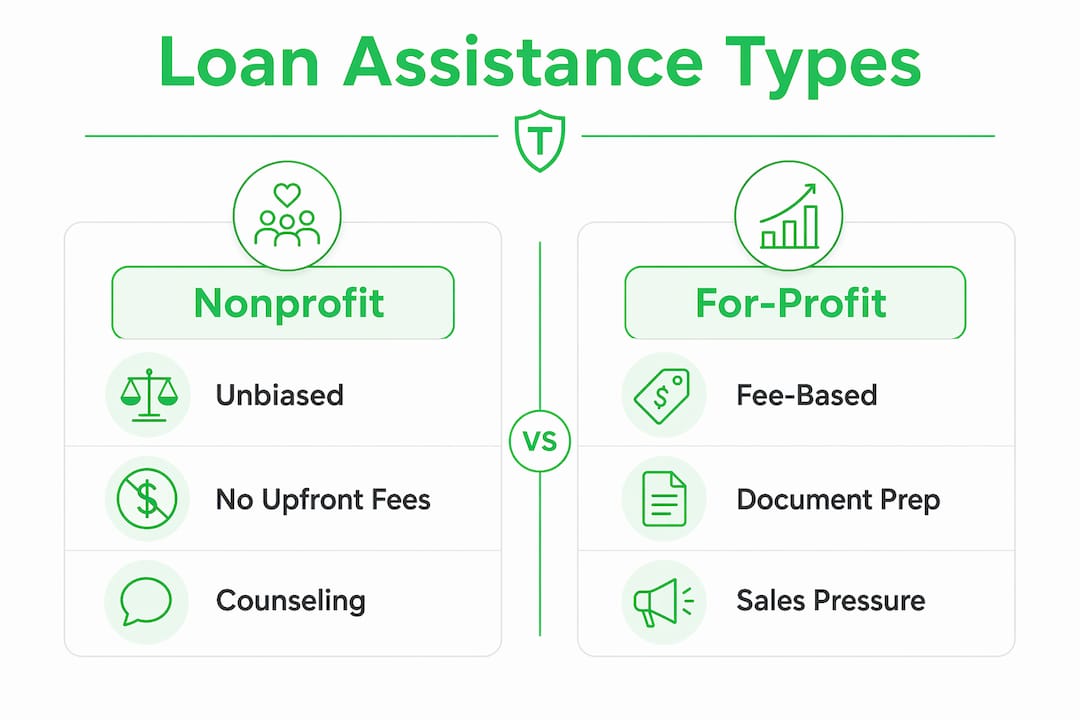
Nonprofit counseling provides unbiased guidance without high-pressure sales, which is the defining advantage over many for-profit alternatives. That neutrality matters most when you are choosing between repayment paths that carry very different long-term costs.
How the 2026 federal reforms change everything for borrowers
The Working Families Tax Cuts Act restructures federal student loan repayment starting July 1, 2026. The law eliminates Grad PLUS loans, sets new lifetime borrowing caps, and reduces all repayment options to two plans: the Repayment Assistance Plan (RAP) and the Tiered Standard Plan. Older plans including Income-Contingent Repayment (ICR), Pay As You Earn (PAYE), and SAVE will be fully phased out by 2028. That means borrowers currently on those plans must transition, and the window to do so strategically is narrow.
Here is what each plan means in practice:
Repayment Assistance Plan (RAP): Payments are calculated at 10% of adjusted gross income minus $50 per dependent, with a $10 monthly minimum. An interest subsidy prevents your balance from growing even if your payment does not cover all accrued interest. Standard forgiveness occurs after 30 years, and RAP payments count toward PSLF.
Tiered Standard Plan: A fixed repayment schedule with payment amounts that vary by loan balance tier. This plan is available to all borrowers, including Parent PLUS borrowers, who are excluded from RAP for new loans taken after July 1, 2026.
Phase-out timeline: ICR, PAYE, and SAVE close to new enrollments now, with full elimination by 2028. Borrowers on these plans who do not act will be automatically moved.
The RAP formula is a meaningful shift. Previous income-driven plans used “discretionary income,” which is income above 150% of the poverty line. RAP uses adjusted gross income directly, which changes affordability calculations for many borrowers, particularly those with dependents. A family of four with moderate income could see lower payments under RAP than under any prior plan.
Pro Tip: If you have dependents, calculate your RAP payment before assuming the Tiered Standard Plan is cheaper. The $50-per-dependent reduction in RAP can significantly lower your monthly obligation compared to a fixed standard payment.
The Congressional Budget Office reports that RAP reduces the subsidy rate for federal loans to under 10%, compared to nearly 37% under previous income-driven plans. This reflects a program designed to be more fiscally balanced, but it also means fewer built-in protections for borrowers who do not actively manage their enrollment.
What services do student loan assistance companies provide?
The scope of services varies widely depending on the type of company you work with. Here is a clear breakdown of what you can expect:
Repayment plan analysis: A good assistance provider reviews your income, family size, loan type, and career goals to recommend RAP versus the Tiered Standard Plan. This is not a one-size-fits-all decision.
PSLF application support: RAP payments count toward PSLF, which requires 120 qualifying payments while working full-time for a qualifying employer. Assistance companies help you verify employer eligibility, submit Employment Certification Forms, and track your payment count.
Loan consolidation guidance: Some borrowers need to consolidate Federal Family Education Loans (FFEL) or Perkins loans into a Direct Loan before accessing RAP or PSLF. An assistance company walks you through this process and flags any eligibility risks.
Deadline tracking and document preparation: Missing a 90-day notification window can result in automatic enrollment into a less favorable plan. Services like TitanPrep track these deadlines and maintain organized records of all submissions and servicer communications.
Discharge program eligibility: For borrowers who may qualify for Total and Permanent Disability discharge or school closure discharge, assistance companies help gather and submit the required documentation.
The critical distinction in financial aid for student loans is between free nonprofit counseling and fee-based document preparation. Nonprofits like Inceptia and TISLA provide counseling at no cost, often contracted by universities. For-profit and document preparation services charge fees for organizing and submitting paperwork, which is a legitimate service as long as the company is transparent about what it does and does not do. The red flag is any company that charges fees to “apply” for programs you can access directly through StudentAid.gov.
Pro Tip: Before paying any company for student loan help, check whether your college or employer offers free counseling through a nonprofit partner. Many borrowers have access to free guidance they never use.
How to compare and choose the right assistance option
Not all student loan help USA providers are equal. Use these criteria to evaluate your options before committing.
Criteria | What to look for |
Nonprofit vs. for-profit | Nonprofits like TISLA and Trellis Company offer free, unbiased advice. For-profit services charge fees and should be transparent about scope. |
Fee structure | Legitimate services disclose all fees upfront. Avoid any company that charges a percentage of your loan balance or guarantees forgiveness. |
Range of services | Look for providers that cover repayment plan selection, PSLF tracking, consolidation guidance, and deadline management. |
Credentials and reviews | Verify the company through the Better Business Bureau, state attorney general records, and independent review platforms. |
Affiliation disclosure | Reputable companies clearly state they are not affiliated with the U.S. Department of Education. |
Warning signs of predatory firms include upfront fees before any service is rendered, promises of guaranteed loan forgiveness, requests for your FSA ID password, and pressure to sign contracts quickly. The Federal Trade Commission has taken action against multiple companies that charged hundreds of dollars to submit forms borrowers could file themselves. You can review common forgiveness scams to recognize these tactics before they cost you money.
Trusted free resources include TISLA, which provides detailed written guidance on every federal repayment program, and Trellis Company, a nonprofit that offers one-on-one counseling. For borrowers who want hands-on document support and deadline tracking, TitanPrep provides a structured service with a client portal for uploading documents and monitoring file status.
Step-by-step process for working with an assistance company
Knowing how to get loan assistance is as important as knowing where to find it. Here is how a productive engagement typically works:
Gather your loan information. Log into StudentAid.gov to pull your complete loan portfolio, including loan types, servicers, balances, and current repayment plan. This is the foundation for every recommendation.
Define your goals. Are you pursuing PSLF? Trying to minimize monthly payments? Planning to pay off loans quickly? Your goal determines which plan and which type of assistance is right for you.
Assess RAP and Tiered Standard Plan eligibility. An assistance company reviews your adjusted gross income, family size, and loan types to model payments under each option. Parent PLUS borrowers with new loans after July 1, 2026 are excluded from RAP and should focus on Tiered Standard Plan strategies.
Prepare and submit documentation. This includes income verification, tax returns, and any program-specific forms. TitanPrep, for example, manages this paperwork and stores records securely for future reference.
Monitor your repayment status. After enrollment, stay in contact with your servicer and your assistance provider. Confirm that payments are being counted correctly, especially if you are pursuing PSLF. Check your forgiveness eligibility annually as your income or employment changes.
Common pitfalls borrowers face without professional help
The 2026 reforms simplify the repayment menu, but they do not simplify the decision-making. Borrowers who manage loans without guidance face several concrete risks.
Automatic enrollment into a less favorable plan. Borrowers who do not respond to servicer notifications within 90 days are automatically placed into the Standard Repayment Plan. For many borrowers, this means significantly higher monthly payments with no forgiveness pathway.
Miscalculating RAP payments. The RAP formula uses adjusted gross income, not discretionary income. Borrowers who estimate payments using old IDR calculators may budget incorrectly and face payment shock.
Missing PSLF qualifications. Many public service employees do not realize their employer qualifies or that their current repayment plan does not count toward the 120-payment requirement. An assistance company identifies these gaps before they cost years of qualifying payments.
Overlooking discharge options. Borrowers with permanent disabilities or those who attended schools that closed may qualify for full discharge. Without guidance, these options go unclaimed.
Falling for scams. Predatory companies target borrowers who are anxious about the 2026 transition. Paying a firm to “guarantee” forgiveness or “negotiate” with the Department of Education is money wasted at best and fraud at worst.
Pro Tip: Set a calendar reminder for 60 days after any servicer notification. That gives you time to research your options and respond before the 90-day automatic enrollment window closes.
Reviewing your repayment plan options before any deadline arrives is the single most effective way to avoid these outcomes. Proactive borrowers consistently pay less over the life of their loans than those who accept default assignments.
Key takeaways
Choosing the right student loan assistance company and repayment plan in 2026 requires understanding the new RAP and Tiered Standard Plan options, verifying the type of assistance you need, and acting before automatic enrollment deadlines close your options.
Point | Details |
Two plans replace all others | RAP and Tiered Standard Plan are the only federal options from July 2026; older plans phase out by 2028. |
RAP uses AGI directly | Payments are 10% of adjusted gross income minus $50 per dependent, with a $10 minimum and interest subsidy. |
PSLF remains tax-free | RAP payments count toward the 120-payment PSLF requirement, and forgiveness under PSLF is not taxable. |
Act within 90 days | Borrowers who miss servicer notifications are auto-enrolled in Standard Repayment, which may cost significantly more. |
Verify before you pay | Nonprofits like TISLA offer free counseling; only pay for document preparation services that are transparent about scope. |
What I’ve learned from watching borrowers navigate 2026
The most common mistake I see is borrowers treating their loan servicer as a neutral advisor. Servicers process payments. They do not model your long-term repayment costs, flag forgiveness opportunities, or remind you that a 90-day window is closing. That gap is exactly where assistance companies, both nonprofit counselors and document preparation services, provide real value.
What I find genuinely encouraging about the 2026 reforms is the simplification. Two plans are easier to compare than seven. RAP’s interest subsidy removes the fear of a growing balance, which was one of the most anxiety-inducing features of older income-driven plans. But simplification only helps borrowers who understand the options. The borrowers I worry about are those who receive a servicer notice, feel overwhelmed, and do nothing.
My practical advice: start with a free nonprofit counselor like TISLA to understand your options without any sales pressure. If you then need help organizing documents, tracking deadlines, and maintaining records, a service like TitanPrep fills that role without replacing the counselor’s guidance. The two are complementary, not competing. And if any company promises you forgiveness or asks for your FSA ID password, walk away. That is not assistance. That is a liability. You can also compare forgiveness versus repayment strategies to sharpen your thinking before any consultation.
— Ellis
How TitanPrep supports borrowers through 2026 changes
TitanPrep is a document preparation and support service built for borrowers managing federal student loan programs. The service helps you organize and submit applications for IDR plans, PSLF, and eligible discharge programs, while tracking deadlines and storing records of all servicer communications. TitanPrep is not affiliated with the U.S. Department of Education, and it does not guarantee forgiveness outcomes. What it does provide is structure, so you stay organized and compliant as the 2026 reforms take effect. Start with the important student loan updates resource to understand what has changed, and explore the federal forgiveness guide to see which programs you may qualify for.
FAQ
What does a student loan assistance company do?
A student loan assistance company helps borrowers select repayment plans, apply for forgiveness programs, and manage loan-related paperwork. Services range from free nonprofit counseling to fee-based document preparation, depending on the provider type.
Is RAP better than the Tiered Standard Plan?
RAP is generally better for borrowers with lower incomes or dependents, since payments are income-based and an interest subsidy prevents balance growth. The Tiered Standard Plan may suit borrowers who want a fixed schedule and plan to pay off loans quickly.
How do I avoid student loan assistance scams?
Never share your FSA ID password, and avoid any company that guarantees forgiveness or charges fees before providing any service. Legitimate assistance companies disclose their scope clearly and are not affiliated with the U.S. Department of Education.
Do RAP payments count toward PSLF?
Yes. On-time RAP payments count toward the 120-payment PSLF requirement, and forgiveness under PSLF remains non-taxable under current law.
What happens if I miss the 90-day repayment plan notification window?
Borrowers who do not respond within 90 days of a servicer notification are automatically enrolled in the Standard Repayment Plan, which may result in substantially higher monthly payments and no forgiveness pathway.
Recommended
Comments