
How to Restart Student Loan Payments in 2026


Restarting student loan payments is defined as resuming regular federal loan payment obligations after a pause, deferment, or forbearance period ends. Knowing how to restart student loan payments the right way means verifying your loan details, updating your contact information, selecting the correct repayment plan, and building a budget that keeps you on track. The stakes are real: the typical borrower faces more than $3,500 per year in additional interest charges once payments resume. Acting early and deliberately is the difference between a smooth restart and an expensive mistake.
How to restart student loan payments: verify your loan status first
Before you make a single payment, you need a clear picture of what you owe and who manages your loans. Log in to StudentAid.gov to see every federal loan tied to your Social Security number, including the servicer name, current balance, and interest rate for each one. Many borrowers discover during this step that their loans have been transferred to a new servicer, which means their old login credentials no longer work.
Once you confirm your servicer, log in directly to that servicer’s website and review the following:
Current balance and any interest that accrued during the pause
Interest rate for each loan, noting whether it is subsidized or unsubsidized
Loan type, since Direct Loans, FFEL Loans, and Perkins Loans each have different repayment options
Servicer contact information, including phone number and mailing address
Updating your contact details is not optional. Your servicer sends legally binding notices to the address and email on file. If that information is outdated, you will miss deadlines that trigger costly consequences. Update your mailing address, email address, and phone number on both StudentAid.gov and your servicer’s portal before your first payment is due.
Pro Tip: Set up a dedicated email folder for all student loan communications. Servicer notices, deadline reminders, and plan change confirmations should never get buried in a general inbox.

Subsidized loans do not accrue interest during deferment, but unsubsidized loans accrue interest daily, compounding into your principal if left unpaid. Knowing which loan type you hold changes how urgently you need to act on interest management.
What repayment plans are available after a payment pause?
The federal repayment plan landscape changed significantly in 2026. Borrowers now have access to the new Repayment Assistance Plan (RAP), the Tiered Standard Plan, and legacy income-driven options like Income-Contingent Repayment (ICR) and Pay As You Earn (PAYE). Each plan carries different monthly payment amounts, forgiveness timelines, and total lifetime costs.
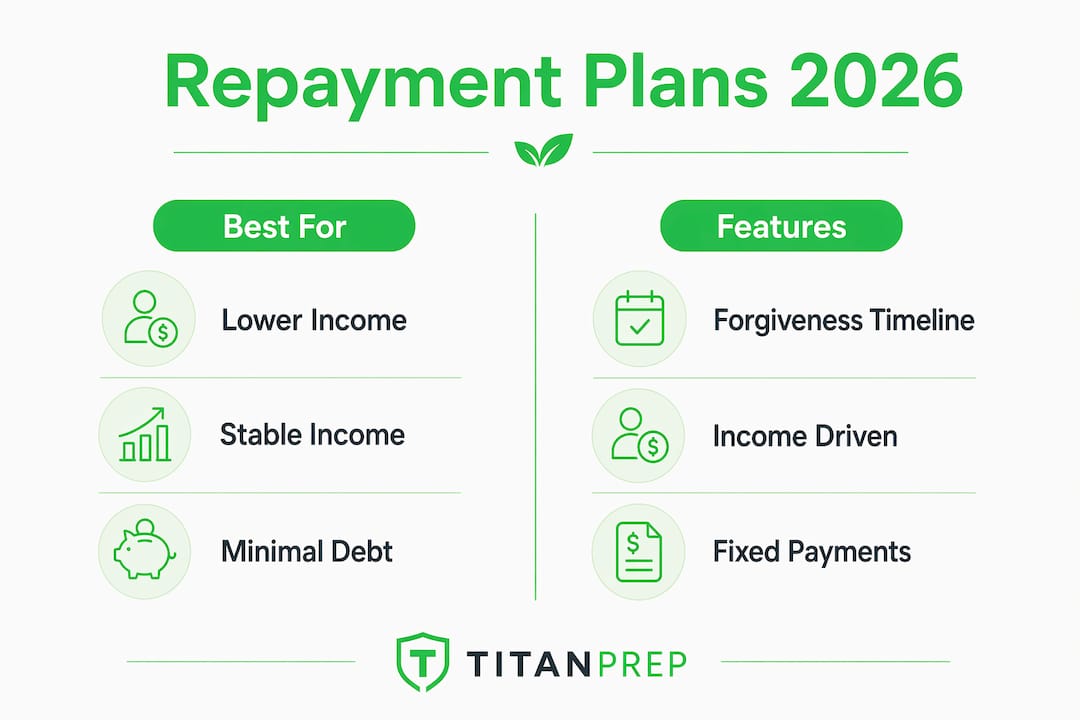
Here is a quick comparison of the main options:
Plan | Best for | Forgiveness timeline |
Repayment Assistance Plan (RAP) | Lower income, larger debt | 20 to 25 years |
Tiered Standard Plan | Smaller balances, faster payoff | No forgiveness, fixed term |
ICR / PAYE | Borrowers already enrolled pre-2026 | Up to 25 years (limited post-2028) |
According to CNBC’s 2026 analysis, borrowers with lower incomes and large debt should prioritize RAP, while smaller balances may benefit more from the Tiered Standard Plan. That guidance matters because the plan you choose determines your monthly payment for years, not just months.
The most critical deadline you need to know: borrowers have a 90-day window from the date their servicer issues a transition notice to choose a repayment plan. Miss that window and you are automatically enrolled in the most expensive standard option available. That clock starts when the servicer mails the notice, not when you open it.
Use the Department of Education’s Loan Simulator tool to compare estimated monthly payments and total costs across all available plans before committing. Focus on total lifetime cost, not just the lowest monthly payment. A lower monthly payment often means more interest paid over time.
Pro Tip: Do not consolidate your loans without fully understanding the trade-offs. Loan consolidation after July 1, 2026, creates a new loan that can eliminate previous repayment benefits and reset your progress toward forgiveness.
Legacy plans like ICR and PAYE lack forgiveness options after 2028, so they may only be useful for reducing immediate payments in the short term. If forgiveness is part of your long-term plan, RAP is the stronger choice for most income-driven borrowers.
How to manage your budget when payments resume
Resuming payments requires a real look at your monthly cash flow. Start by listing your take-home income and every fixed expense: rent, utilities, groceries, transportation, and insurance. What remains after those essentials is your discretionary budget, and your loan payment needs to fit inside it without relying on credit cards or savings to cover the gap.
Follow these steps to build a payment-ready budget:
Calculate your expected monthly payment using the Loan Simulator before your first bill arrives, so the number is not a surprise.
Identify one or two discretionary expenses to reduce, such as subscription services or dining out, to create room for the payment.
Enroll in autopay with your servicer. Federal loan servicers offer a 0.25% interest rate reduction for borrowers who sign up for automatic payments. That discount adds up meaningfully over a 10 to 20-year repayment term.
Apply any extra money to your highest-interest loan first. This debt avalanche method reduces total interest paid faster than spreading extra payments across all loans equally.
Check your credit report at AnnualCreditReport.com within 60 days of your first payment to confirm your servicer is reporting payments correctly.
Avoid long-term forbearance as a default solution. If your budget is genuinely tight, an income-driven plan like RAP is a far better option than stacking forbearance months, which do not count toward forgiveness and allow interest to grow. Repayment restarts post-pandemic are slower and more complex than pre-pandemic restarts, which means borrowers need to be more deliberate, not less.
Pro Tip: If you work in public service, government, or a qualifying nonprofit, confirm your employer qualifies for Public Service Loan Forgiveness (PSLF) before choosing a repayment plan. Your plan selection directly affects PSLF eligibility.
Common mistakes borrowers make when restarting payments
The most expensive errors borrowers make are not financial. They are organizational. Here are the pitfalls that cost people the most:
Waiting too long to open servicer notices. The 90-day grace period starts when the notice is mailed, not when you read it. Waiting until the final week often leads to rushed decisions and documentation errors.
Ignoring servicer communications entirely. Servicers send notices about plan changes, payment amounts, and deadlines. Missing even one can result in default auto-enrollment or a missed forgiveness opportunity.
Consolidating without understanding the consequences. Consolidation resets your repayment history and can eliminate benefits tied to your original loans, including progress toward PSLF.
Relying on deferment or forbearance without exploring income-driven options. Forbearance months do not count toward forgiveness timelines. If you qualify for RAP or another income-driven plan, those months do count.
Skipping autopay enrollment. The 0.25% interest rate discount is free money. Not enrolling is a straightforward mistake with a straightforward fix.
Misunderstanding subsidized versus unsubsidized interest. Subsidized loans protect you during deferment. Unsubsidized loans do not. Treating them the same way leads to balance growth you did not expect.
Borrowers who act early, stay organized, and choose their repayment plan deliberately are the ones who avoid the most costly outcomes. The system rewards preparation, not patience.
For borrowers pursuing PSLF, the PSLF Buyback option lets you restore months lost to forbearance by paying estimated IDR amounts for those periods. It requires documentation and takes time to process, so treat it as a long-term strategy, not a quick fix.
Key takeaways
Restarting student loan payments successfully requires early action, correct plan selection, and consistent budget management to avoid auto-enrollment penalties and unnecessary interest costs.
Point | Details |
Verify loan status first | Log in to StudentAid.gov and your servicer portal to confirm balances, rates, and servicer contact details. |
Act within the 90-day window | Choose a repayment plan before your servicer’s deadline to avoid costly auto-enrollment in the most expensive option. |
Enroll in autopay | A 0.25% interest rate reduction is available to borrowers who set up automatic payments with their servicer. |
Choose plans by total cost | Compare lifetime costs across RAP, Tiered Standard, and legacy plans using the Department of Education’s Loan Simulator. |
Avoid forbearance as a default | Income-driven plans like RAP count toward forgiveness timelines; forbearance months do not. |
What I’ve learned about restarting payments in a shifting repayment landscape
The borrowers I see struggle the most are not the ones with the largest balances. They are the ones who waited for clarity that never came. The federal repayment system in 2026 is genuinely more complex than it was before the pause, and the plan options available today carry real trade-offs that did not exist a few years ago.
My honest observation: most borrowers underestimate how much the plan selection decision matters. Choosing RAP versus the Tiered Standard Plan is not a minor administrative choice. It can mean tens of thousands of dollars in total interest over the life of the loan, or the difference between qualifying for forgiveness and paying until the balance is gone out of pocket.
The tools are there. StudentAid.gov and the Loan Simulator give you real numbers to work with. The problem is that most people do not use them until they are already behind. I would also caution anyone against rushing into consolidation just because a servicer representative suggests it. Consolidation has legitimate uses, but it also has real costs that are easy to overlook when you are stressed about an upcoming payment deadline.
Act early. Use the official tools. And if you are pursuing PSLF, treat every month of qualifying payment as something worth protecting.
— Ellis
How TitanPrep can help you stay organized through the restart
Restarting payments involves more paperwork, more deadlines, and more decisions than most borrowers expect. TitanPrep is a document preparation and support service that helps borrowers organize and submit applications for Income-Driven Repayment, PSLF, and other federal programs. Through TitanPrep’s client portal, you can upload documents, track submission status, and stay on top of deadlines without losing critical paperwork. If you want a clear starting point, the federal forgiveness guide covers the top federal loan forgiveness options and what it takes to qualify. For borrowers working toward PSLF specifically, TitanPrep’s PSLF preparation support is designed to keep your file complete and your progress protected. TitanPrep does not guarantee outcomes. Eligibility is determined by the U.S. Department of Education or your loan servicer.
FAQ
How do I restart my student loan payments after a pause?
Log in to StudentAid.gov to confirm your loan servicer, then contact that servicer directly to verify your payment amount and due date. Update your contact information and select a repayment plan within the 90-day window your servicer provides.
What happens if I miss the repayment plan deadline?
If you do not choose a plan within the 90-day window after your servicer issues a transition notice, you are automatically enrolled in the most expensive standard repayment option available. Acting before the deadline is the only way to avoid this outcome.
Which repayment plan is best for low-income borrowers?
The Repayment Assistance Plan (RAP) is the strongest option for borrowers with lower incomes and larger loan balances, as payments are based on income and the plan counts toward forgiveness timelines. Use the Department of Education’s Loan Simulator to compare your specific numbers before deciding.
Does autopay reduce my student loan interest rate?
Yes. Federal loan servicers offer a 0.25% interest rate reduction for borrowers who enroll in automatic payments. This discount applies for as long as autopay remains active.
Can I change my repayment plan after I restart payments?
You can change your repayment plan after payments resume by contacting your servicer or submitting a request through StudentAid.gov. Some changes take one to two billing cycles to take effect, so submit your request well before your next due date.
Recommended
Comments