
Do I Need Help with Student Loans? Your 2026 Guide


Recognizing when you need help with student loans is the first step toward protecting your credit, your income, and your financial future. Federal student loan borrowers face a system that changed significantly in 2026, with the Department of Education launching new repayment plans, repealing the SAVE Plan, and notifying millions of borrowers to act within tight deadlines. If you are unsure whether your current situation calls for outside support, this guide walks you through the clear signs, the available student loan relief options, and the practical steps to take right now.
Do I need help with student loans? Signs you should act now
The clearest sign you need help with student loan debt is that you have missed a payment or expect to miss one soon. Federal Student Aid defines the default threshold at 270 days past due. That number matters because once you cross it, the consequences shift from manageable to serious: your entire loan balance becomes due immediately, collections activity begins, and your wages can be garnished without a court order.
Most borrowers do not realize how quickly 270 days arrives. Nine months of missed payments sounds like a long runway, but servicers often take weeks to process communications, and delays in submitting deferment or forbearance requests can count against you. The time to call your servicer is before you miss a payment, not after.
Here are the specific conditions that signal you need student loan assistance right now:
You have missed one or more payments and have not contacted your servicer
Your monthly payment exceeds 10% of your take-home income
You are enrolled in the now-unlawful SAVE Plan and have not switched to a legal repayment option
You have received a notice from the Default Resolution Group or a collections agency
You are pursuing Public Service Loan Forgiveness (PSLF) but have not confirmed your employer qualifies
You have private loans with no income-based options and your income has dropped
Pro Tip: The National Foundation for Credit Counseling (NFCC) offers free online counseling that takes less than 10 minutes to start. If your situation is more complex, such as dealing with private loans or pursuing forgiveness, an NFCC credit counselor can walk you through your options at no cost.
What student loan relief options are actually available?
Student loan assistance falls into five main categories: income-driven repayment, deferment and forbearance, loan rehabilitation, consolidation, and forgiveness. Understanding which one fits your situation is what separates borrowers who stay on track from those who default unnecessarily.

Relief Option | Best For | Key Detail |
Income-Driven Repayment (IDR) | Borrowers with low income relative to debt | Payments tied to income; new 2026 plans replace SAVE, PAYE, and ICR |
Deferment | Temporary hardship (unemployment, school enrollment) | Interest may still accrue on unsubsidized loans |
Forbearance | Short-term payment pause | Interest accrues on all loan types; use sparingly |
Loan Rehabilitation | Borrowers already in default | Requires nine consecutive on-time payments to remove default from credit history |
Forgiveness Programs | PSLF, teacher loan forgiveness, disability discharge | Eligibility determined by the Department of Education |
Effective July 1, 2026, the federal government launched two new repayment plans. The Repayment Assistance Plan is the new income-driven option, replacing the unlawful SAVE Plan. The Tiered Standard Plan replaces the old Standard 10-year plan with a structure that adjusts payments based on loan balance. Both plans are now the primary legal options for most federal borrowers.
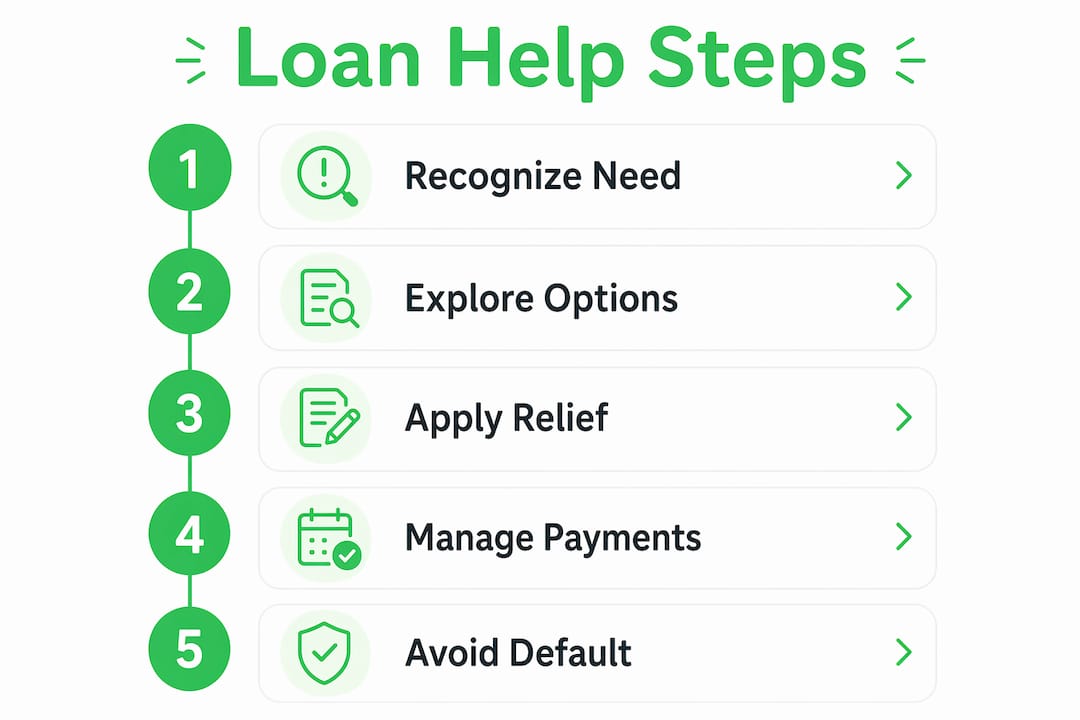
Loan rehabilitation deserves special attention if you are already in default. Under the new 2026 regulations, rehabilitation is available even if you previously completed the process once before. This is a meaningful change that gives borrowers a genuine second chance to clear the default record from their credit history.
Pro Tip: If you are weighing repayment plan options, review the student loan repayment plans breakdown before calling your servicer. Walking into that conversation with a clear preference saves time and reduces the chance of being placed in a plan that does not fit your income.
How do the 2026 federal changes affect your options?
The 2026 federal rule changes are the most significant overhaul to student loan repayment in over a decade. The Department of Education notified 7.5 million SAVE Plan borrowers to exit the unlawful plan and enroll in a legal alternative by July 1, 2026, with a 90-day transition window communicated to each borrower. Missing that window does not mean automatic default, but it does mean your account enters a limbo state that can trigger interest accumulation and servicer confusion.
The new rules also phase out the Income-Contingent Repayment (ICR) plan and the Pay As You Earn (PAYE) plan. Borrowers currently on those plans need to transition to either the Repayment Assistance Plan or the Tiered Standard Plan. The Federal Register final rule makes clear that these older plans are no longer accepting new enrollments as of July 1, 2026.
Plan | Status as of July 1, 2026 | Replacement |
SAVE Plan | Repealed (unlawful) | Repayment Assistance Plan |
PAYE | Closed to new enrollees | Repayment Assistance Plan |
ICR | Closed to new enrollees | Repayment Assistance Plan |
Standard 10-Year | Replaced | Tiered Standard Plan |
IBR | Still available | No change |
One underappreciated detail in the new rules is the role of IRS data sharing. Borrowers who consent to IRS data access can have their income verified automatically, which speeds up enrollment in the Repayment Assistance Plan significantly. Withholding consent means manual income verification, which can delay your enrollment and leave you in an unprotected status longer than necessary.
Delays in submitting relief requests can lead to default even when you intended to apply for deferment or forbearance. Always confirm in writing that your servicer has applied your request correctly. A phone call is not enough. Request a written confirmation or check your account status online within five business days of submitting any request.
How to get help: practical steps to take right now
Getting the right support does not require a lawyer or a paid consultant. The most effective resources are free, and the process is straightforward when you follow the right sequence.
Log in to your Federal Student Aid account at StudentAid.gov. Confirm your current loan servicer, your balance, and your repayment plan status. Many borrowers discover they are on a plan they did not choose or that their servicer has changed without clear notice.
Contact your servicer directly. FSA advises contacting your servicer as soon as you realize you cannot afford your payments. Ask specifically about income-driven repayment options, deferment eligibility, and whether you qualify for the new Repayment Assistance Plan.
Use NFCC counseling if your situation is complex. The NFCC’s free student loan counseling is especially useful if you have a mix of federal and private loans, if you are pursuing forgiveness, or if you have already missed payments. A certified counselor can help you prioritize which loans to address first.
If you are in default, contact the Default Resolution Group. The Default Resolution Group is the official servicer for defaulted federal loans and does not charge fees for its services. Any third party that charges you to contact DRG on your behalf is not a legitimate service.
Apply for repayment plan changes through StudentAid.gov or your servicer’s portal. Do not rely on verbal confirmations. Submit your application in writing, keep a copy, and follow up to confirm processing.
Pro Tip: Scams targeting student loan borrowers are common. Legitimate federal programs are free to apply for. If someone charges an upfront fee to “guarantee” forgiveness or promises to reduce your balance overnight, that is a red flag. Verify any service against the Federal Student Aid website before sharing personal information.
If you want a side-by-side look at your repayment options before making a decision, the federal repayment assistance guide at Titanprep covers the current options in plain language.
Key takeaways
Borrowers who act before reaching the 270-day default threshold have significantly more options and face far lower costs than those who wait.
Point | Details |
Default threshold is 270 days | Contact your servicer before day 271 to preserve your repayment options and avoid collections. |
2026 plans replace SAVE, PAYE, and ICR | Enroll in the Repayment Assistance Plan or Tiered Standard Plan if you are on a phased-out plan. |
Rehabilitation is still available | Even prior rehabilitators can use this process under 2026 rules to clear default from their credit record. |
Free help exists | NFCC counseling and the Default Resolution Group both provide no-cost guidance for federal borrowers. |
Confirm everything in writing | Verbal servicer confirmations are not enough. Always verify that relief requests are applied to your account. |
What I have learned from watching borrowers wait too long
I have spent years watching borrowers make the same costly mistake: they know something is wrong with their loan situation, but they wait to act because the process feels overwhelming. By the time they reach out, they are already in default, already facing wage garnishment, and already dealing with a credit hit that takes years to repair.
The borrowers who come out ahead are not the ones with the smallest balances or the highest incomes. They are the ones who called their servicer at month two, not month nine. They are the ones who switched off the SAVE Plan the week the Department of Education sent the notice, not the week before the deadline.
The 2026 changes are genuinely disruptive for millions of people. But they also created new options, including a second shot at rehabilitation for borrowers who already used it once. That is not a small thing. If you previously rehabilitated a defaulted loan and fell back into trouble, you now have a path forward that did not exist before.
My honest advice: stop treating your student loans as a problem you will deal with later. The federal system rewards borrowers who engage early and penalizes those who disengage. The SAVE Plan repeal is a good example of how fast the rules can change. Borrowers who stayed informed and acted quickly had weeks to make a smooth transition. Those who ignored the notices are still sorting out the consequences.
You do not need to figure this out alone. Free counseling, official servicers, and document support services all exist to help you stay organized and compliant.
— Ellis
How Titanprep can support your next steps
Titanprep is a document preparation and support service built for federal student loan borrowers who need help staying organized through complex program requirements. Whether you are applying for the new Repayment Assistance Plan, preparing a PSLF application, or working through a rehabilitation agreement, Titanprep helps you prepare and submit the right paperwork on time. The service tracks deadlines, stores your documents securely, and maintains records of your submissions and communications with loan servicers. Titanprep does not guarantee outcomes. Eligibility for any federal program is determined solely by the Department of Education or your servicer. Start by reviewing the latest student loan updates to understand exactly where you stand under the 2026 rules, then explore how Titanprep works to see whether document support is the right fit for your situation.
FAQ
When do federal student loans go into default?
Federal student loans enter default after 270 days of missed payments. At that point, the full balance becomes due and collections activity begins.
Do I qualify for student loan help if I am already in default?
Yes. Borrowers in default can contact the Default Resolution Group, which is the official free servicer for defaulted federal loans, to begin rehabilitation or consolidation. Under 2026 rules, rehabilitation is available even for borrowers who completed the process previously.
Is loan forgiveness an option for most borrowers?
Loan forgiveness through programs like Public Service Loan Forgiveness or teacher loan forgiveness is available, but eligibility requirements are specific. The Department of Education determines eligibility based on employment type, repayment plan, and payment history.
What happened to the SAVE Plan?
The SAVE Plan was ruled unlawful and repealed. The Department of Education notified 7.5 million affected borrowers to transition to a legal plan within a 90-day window. The replacement is the Repayment Assistance Plan, which launched July 1, 2026.
How do I find the best resources for student loans?
Start at StudentAid.gov to confirm your servicer and loan status. For free counseling, the NFCC offers both quick online tools and in-depth support from certified credit counselors. For document preparation and deadline tracking, Titanprep provides structured support for federal program applications.
Recommended
Comments