
Why Student Loans Matter: Protect Your Finances Now


Student loans can quietly reshape your financial life for decades. Even when payments are paused or you believe your account is in good standing, your loan balance, repayment status, and plan eligibility can shift in ways that catch you off guard. According to the Federal Reserve’s 2024 household survey, a significant share of borrowers reported being behind on payments or in collections, revealing just how widespread this challenge really is. This guide breaks down why student loans matter, what the numbers actually show, and what you can do right now to protect your credit and financial future.
Table of Contents
Key Takeaways
Point | Details |
Loans shape your finances | Student loans impact your monthly cash flow and long-term financial health. |
Plan choice is critical | Choosing (and changing) your repayment plan directly affects payment amounts and forgiveness eligibility. |
Policy changes require action | Stay vigilant when government policies or plans change to avoid missed payments or default. |
Delinquencies hurt credit fast | Falling behind on payments damages your credit and puts you at risk of collections. |
Expert help is valuable | Professional guidance can help you navigate changing programs and maximize relief options. |
The real scope of student loans in America
If you feel like student loan debt is everywhere, that’s because it is. The federal data paints a clear picture of just how many people are navigating this system alongside you.
According to the Federal Reserve’s 2024 household survey, more than 4 in 10 people who pursued postsecondary education took out student loans. As of the survey period, 17% of adults still owed money on those loans. Of borrowers who had outstanding balances, 57% were required to make monthly payments as of October 2024, and a troubling 20% reported being behind on payments or in collections for at least one loan.

These numbers are not just statistics. They represent millions of real households trying to manage monthly bills, build savings, and maintain their credit at the same time.
Key facts at a glance:
More than 4 in 10 postsecondary attendees took out student loans
17% of adults still carry a student loan balance
57% of borrowers with active balances were required to make payments as of October 2024
20% of those borrowers reported being behind or in collections in 2024
Metric | Data point |
Borrowers who used student loans | Over 40% of postsecondary attendees |
Adults still carrying balances | 17% |
Required to make monthly payments (Oct. 2024) | 57% of active borrowers |
Behind on payments or in collections | 20% of those required to pay |
What makes this even more complicated is that many borrowers had paused payments during federal forbearance periods. When those pauses ended, balances and required payment amounts surprised a lot of people. Confusion during that shift led some borrowers to miss critical deadlines.
Staying current on student loan updates is one of the most effective ways to avoid being blindsided. Improving financial literacy around loan terminology, repayment mechanics, and program eligibility can also reduce the stress that comes with this process.
Now that we’ve seen just how common student loans are, let’s look at why the repayment plan you choose is so critical.
Repayment plan choices: Why they matter more than ever
Not all repayment plans are created equal. The plan you’re currently enrolled in directly affects how much you pay each month, how quickly your balance grows, and whether you’ll eventually qualify for loan forgiveness.
Federal student loan borrowers have several options. Standard repayment plans spread your balance over 10 years with fixed payments. Income-Driven Repayment (IDR) plans, on the other hand, calculate your payment as a percentage of your discretionary income. IDR plans can lower your monthly payment significantly, and after 20 to 25 years of qualifying payments, remaining balances may be forgiven.
As Brookings research on the student loan landscape explains, federal plan mechanics can drastically change your monthly payment amount, forgiveness timeline, and eligibility status. Choosing the wrong plan at the wrong time can cost you thousands of dollars or delay forgiveness by years.
Here’s how popular repayment plans compare:
Plan type | Payment basis | Forgiveness timeline |
Standard repayment | Fixed monthly amount | No forgiveness option |
Income-Based Repayment (IBR) | 10% to 15% of discretionary income | 20 to 25 years |
Pay As You Earn (PAYE) | 10% of discretionary income | 20 years |
SAVE (currently under legal review) | 5% to 10% of discretionary income | Varies |
Public Service Loan Forgiveness (PSLF) | Any qualifying IDR plan | 10 years of qualifying payments |
Steps to evaluate your repayment plan:
Log in to your loan servicer’s portal and confirm which plan you’re currently enrolled in.
Use the Loan Simulator on the federal student aid website to compare plan options.
Consider your income, family size, and career path before selecting or switching plans.
Check whether your plan qualifies you for any forgiveness program you’re pursuing.
Set a reminder to review your plan every year, especially if your income or employment changes.
Pro Tip: If you’re working toward Public Service Loan Forgiveness (PSLF), not all IDR plans qualify equally. Review our popular forgiveness programs guide to confirm your plan is compatible before submitting your next payment.
Our federal loan forgiveness guide also walks you through what forgiveness program options are currently available and what documentation you need to get started. Recent Department of Education guidance has also clarified important eligibility requirements that borrowers should know about before applying.
With repayment strategies in focus, let’s discuss what happens when broad system changes challenge your ability to navigate these plans.
When the system changes: Navigating transitions and policy shake-ups
Federal student loan policy has shifted considerably in recent years, and those shifts carry real risks for borrowers. When a widely used repayment plan is paused or declared legally unlawful, the borrowers enrolled in it face immediate uncertainty.
The SAVE plan (Saving on a Valuable Education) is a recent example. The Department of Education announced next steps for borrowers enrolled in the SAVE plan after it was found to be an unlawful IDR plan, giving borrowers enrolled in the SAVE plan at least 90 days to transition to a legal repayment arrangement. More than 7.5 million borrowers received guidance about their options.
“When a plan is challenged legally, borrowers enrolled in it must act quickly to avoid being placed on higher-payment alternatives by default.”
That 90-day window sounds like plenty of time. But for borrowers who don’t monitor their mail, email, or servicer communications regularly, that window can close before they realize it’s open.
Common risks during plan transitions:
Missing official communications from your servicer or the Department of Education
Being placed into a default repayment plan that carries a higher monthly payment
Losing credit toward forgiveness programs during periods of plan uncertainty
Confusing administrative forbearance with active qualifying repayment
Assuming nothing needs to be done because payments are temporarily paused
Our article on SAVE plan changes breaks down exactly what happened and what borrowers in that situation should do next. You can also check the latest critical student loan updates to see whether any other programs are currently being reviewed or modified.
Pro Tip: Don’t wait for your servicer to contact you. Log in to your servicer account at least once a month to check for messages, plan status changes, and any notices about your enrollment. Proactive monitoring catches problems early, before they affect your payments or forgiveness progress.
If you’ve already run into loan processing delays, you’re not alone. Delays during transition periods are common, and knowing how to document your submissions and follow up can make a real difference.
These operational shake-ups also influence your long-term credit and financial stability, which we’ll explore next.
How loans impact your credit and financial future
Your student loans don’t exist in a bubble. They’re tied directly to your credit report, and what happens with your repayment status affects your ability to rent an apartment, qualify for a car loan, or even get hired for certain jobs.
When federal student loan payment reporting resumed after the pandemic-era pause, the impact on credit scores was fast and significant. According to the New York Fed’s Liberty Street Economics, delinquency rates spiked from under 1% during the pause period to nearly 8% once reporting resumed, and credit scores dropped meaningfully for affected borrowers.
Period | Reported delinquency rate |
During federal payment pause | Under 1% |
After reporting resumed | Nearly 8% |
That jump happened quickly. Borrowers who assumed their accounts were fine discovered delinquencies they hadn’t anticipated, especially if they had not re-enrolled in a qualifying repayment plan before the pause ended.
“Credit damage from student loan delinquency doesn’t reverse quickly. A single missed payment can stay on your credit report for up to seven years.”
What happens if you fall behind:
Your loan servicer reports the delinquency to the three major credit bureaus
Your credit score drops, often by 50 to 100 points or more depending on your current score
After 270 days of non-payment, federal loans enter default
Defaulted loans can trigger wage garnishment, tax refund seizure, and collection fees
Your eligibility for future federal financial aid is suspended
If you’re worried about rising payments, reading about lowering your payments can give you a clearer picture of your options before your account falls behind.
Understanding these risks raises another central question: What real help is available, and how do you access it when you need it?
Finding help: Guidance and pathways to relief
The federal student loan system does offer real options for borrowers who are struggling. The challenge is that those options come with specific requirements, documentation needs, and timing windows. Getting the right help at the right time is not always straightforward.
As Investopedia’s guide to IDR applications makes clear, IDR eligibility and terms can shift significantly depending on new legal rulings and policy decisions. What qualified you last year may not apply today, and what’s unavailable today may reopen in the future.
Available pathways to explore:
Income-Driven Repayment (IDR) plans based on your income and family size
Public Service Loan Forgiveness (PSLF) for qualifying government and nonprofit employees
Teacher Loan Forgiveness for educators in low-income schools
Total and Permanent Disability (TPD) discharge for borrowers with qualifying conditions
Borrower Defense to Repayment for those who attended fraudulent institutions
Steps to get started with federal relief options:
Gather your loan details: servicer name, loan types (Direct, FFEL, Perkins), and current balances.
Check your income and family size to estimate your IDR payment options.
Confirm your employment status if you’re pursuing PSLF or Teacher Loan Forgiveness.
Review the documentation your servicer requires before you apply.
Submit your application and track confirmation receipts carefully.
Monitor your account for processing status and follow up if you don’t receive a response within 30 days.
Pro Tip: Be cautious of anyone promising instant forgiveness or asking for upfront fees. Review our forgiveness scam warning guide to learn how to spot common fraud tactics before they cost you money.
Our loan forgiveness guide is a helpful starting point if you’re unsure which program fits your situation.
Why what you hear about student loans can be misleading
Here’s something that many mainstream articles won’t tell you plainly: confusion about student loans is not just a knowledge problem. It’s often a system problem.
The Brookings Institution notes that borrower confusion stems from genuine policy design trade-offs, legal uncertainty, and plan transitions that change what borrowers qualify for and when. This means that even well-informed borrowers who follow the rules carefully can end up in difficult situations through no fault of their own.
Many borrowers fall into a passive mindset, waiting for federal programs to deliver relief automatically. That approach is understandable. But it’s also risky. Plans that existed last year may not be available this year. Programs that were paused may reopen with new requirements. Servicer errors happen and go unnoticed when borrowers aren’t checking in regularly.
The most resilient borrowers we see are not the ones who know the most about loan law. They’re the ones who stay engaged, check their accounts regularly, keep copies of every submission, and respond promptly when their servicer sends a notice. Stay current with loan updates and treat your student loan account like any other important financial account that deserves regular attention.
Waiting for the perfect solution to arrive is not a strategy. Staying organized and proactive is.
How TitanPrep can help you manage student loans
Managing federal student loans requires more than just good intentions. It requires organized records, timely submissions, and ongoing awareness of changing program rules.
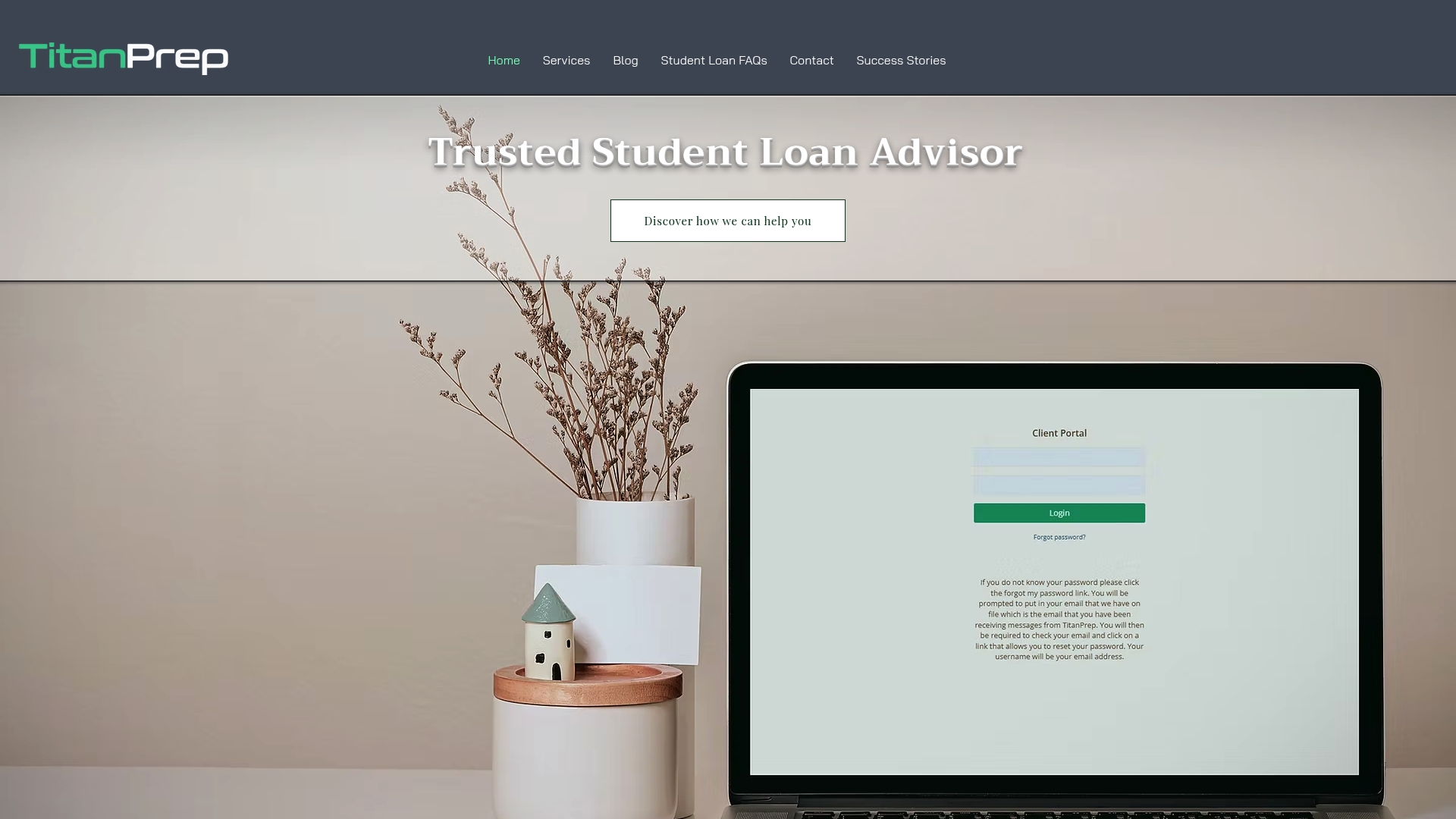
TitanPrep is a document preparation and support service designed specifically for borrowers navigating this process. Whether you’re applying for an IDR plan, working toward PSLF, or trying to understand what changed with the latest student loan updates, TitanPrep helps you stay organized and on deadline. The team assists with preparing and submitting paperwork, tracking key dates, and maintaining records of your communications with servicers. TitanPrep does not guarantee forgiveness or specific outcomes, but it does help you put your best foot forward. Explore the federal forgiveness guide or visit TitanPrep’s main site to learn more about personalized support options.
Frequently asked questions
Why do student loans affect my credit score so much?
Missing student loan payments leads to delinquency, which is reported to credit bureaus and can cause significant drops in your credit score. When the pause on federal loan reporting ended, delinquency rates spiked sharply and affected scores for millions of borrowers almost immediately.
How can I know which student loan repayment plan is best for me?
Compare your options based on your income, loan amount, and career plans, and check for updates regularly because plan terms and eligibility can change. Federal plan mechanics can drastically shift your monthly payment and forgiveness timeline depending on which plan you’re enrolled in.
What should I do if my repayment plan is discontinued or changed by the government?
Watch for official guidance from the Department of Education and your servicer, and seek expert help early to transition to an eligible plan before deadlines pass. When the SAVE plan was declared unlawful, borrowers were given at least 90 days to act, but many missed that window by not monitoring their accounts.
Are federal forgiveness programs at risk of ending?
Some programs face legal and policy challenges, but viable forgiveness options still exist, and proactive application remains the most reliable approach. IDR applications can still be worth pursuing for borrowers with limited incomes or high balances, even as program terms evolve.
Does pausing my payments affect my status or future repayment?
Paused payments typically don’t count as delinquency during an official forbearance period, but interest may still accrue and your required payment could rise when repayment resumes. During periods when reporting is suspended, delinquency statistics differ significantly from active repayment periods, which means the true risk isn’t always visible until payments restart.
Recommended
Comments