
Student loan discharge examples: Key paths and how they work


When life takes an unexpected turn, such as a serious disability or a school that suddenly closes its doors, the weight of student loan debt can feel impossible to manage. Federal discharge programs exist specifically for moments like these. Unlike forgiveness programs tied to years of qualifying payments, a discharge can wipe out your federal student loan balance entirely based on a specific qualifying event. Knowing which path fits your situation, and how to document your case properly, can make the difference between carrying that debt for decades and eliminating it for good.
Table of Contents
Key Takeaways
Point | Details |
Major discharge types | The main federal discharge pathways are disability, school closure, and borrower defense based on school misconduct. |
Eligibility varies | Each discharge program has its own unique criteria and proof requirements. |
Real-world impact | Hundreds of thousands of borrowers have had billions in debt canceled through these discharges. |
Documentation is crucial | The difference between approval and denial often comes down to proper documentation and timing. |
Expert help recommended | Professional guidance can help you select the right path and avoid costly mistakes. |
What qualifies for student loan discharge?
Not every hardship qualifies for a student loan discharge. The federal government offers several distinct programs, each with its own rules, required evidence, and administrative process. The three most widely used discharge types are Total and Permanent Disability (TPD), Closed School, and Borrower Defense to Repayment (BDR).
It helps to understand each one as a separate pathway before deciding which applies to your situation. As noted by Federal Student Aid, borrowers should treat TPD, Closed School, and BDR as separate pathways with unique evidence and rules. Mixing up requirements across these programs is one of the most common reasons applications stall or get denied.
Here is a quick look at the core differences:
TPD discharge applies when a borrower has a total and permanent disability that prevents them from working. Proof must come from the Social Security Administration (SSA), the Department of Veterans Affairs (VA), or a licensed physician.
Closed School discharge applies when your school shut down while you were enrolled or very shortly after you withdrew, leaving you without a degree or credential you paid for.
Borrower Defense to Repayment (BDR) applies when the school engaged in misconduct, such as misrepresentation or illegal recruiting practices, that directly harmed you.
A few key terms are worth knowing. “Substantial gainful activity” refers to the ability to perform meaningful work for income. For TPD purposes, your disability must prevent this entirely. The “evidence standard” means the quality and type of proof required. Each program applies a different standard.
Understanding these closed school discharge criteria and TPD discharge details before you apply saves significant time and helps you build a stronger case from the start.
Pro Tip: Before submitting any application, call your loan servicer to confirm which loans are eligible. Not all loan types qualify for every discharge program.
Total and Permanent Disability (TPD) discharge: Real scenarios
TPD discharge is the most widely used federal loan discharge program. It is designed for borrowers whose physical or mental disability permanently prevents them from maintaining substantial gainful activity, meaning they cannot sustain meaningful employment.
There are three documentation paths you can take:
SSDI or SSI benefits from the Social Security Administration. If you already receive Social Security Disability Insurance or Supplemental Security Income, the SSA can send your eligibility data directly to the loan servicer in some cases, making the process more streamlined.
VA disability determination. Veterans who have a service-connected disability rated at 100% or a determination of “unemployability” by the VA may qualify. This route has led to automatic approvals for many veterans.
Certification from a licensed physician. If you do not have SSA or VA documentation, a physician can certify that your disability is severe, indefinite, and prevents you from working.
The distinction between automatic and manual approval matters. Some borrowers, particularly veterans with a qualifying VA rating, have had their TPD discharge processed without submitting a separate application. Others must go through the full application and review process, which can take significantly longer. For tips on managing delays, reviewing processing timeline tips can help you stay organized and avoid missing critical deadlines.
The scale of this program is significant. Between 2020 and 2025, $18.7 billion in student debt was discharged for nearly 633,000 disabled borrowers. That tells you this is a real, functioning program with consistent outcomes for qualifying borrowers.
“TPD discharge requires proving inability to engage in substantial gainful activity via SSDI/SSI, VA, or medical certification.”
Real borrower scenarios:
Scenario A: Social Security match. A borrower has been receiving SSDI for two years when she learns her loans can be discharged. Because her SSA data matches the Department of Education records, the discharge is processed with minimal paperwork on her part.
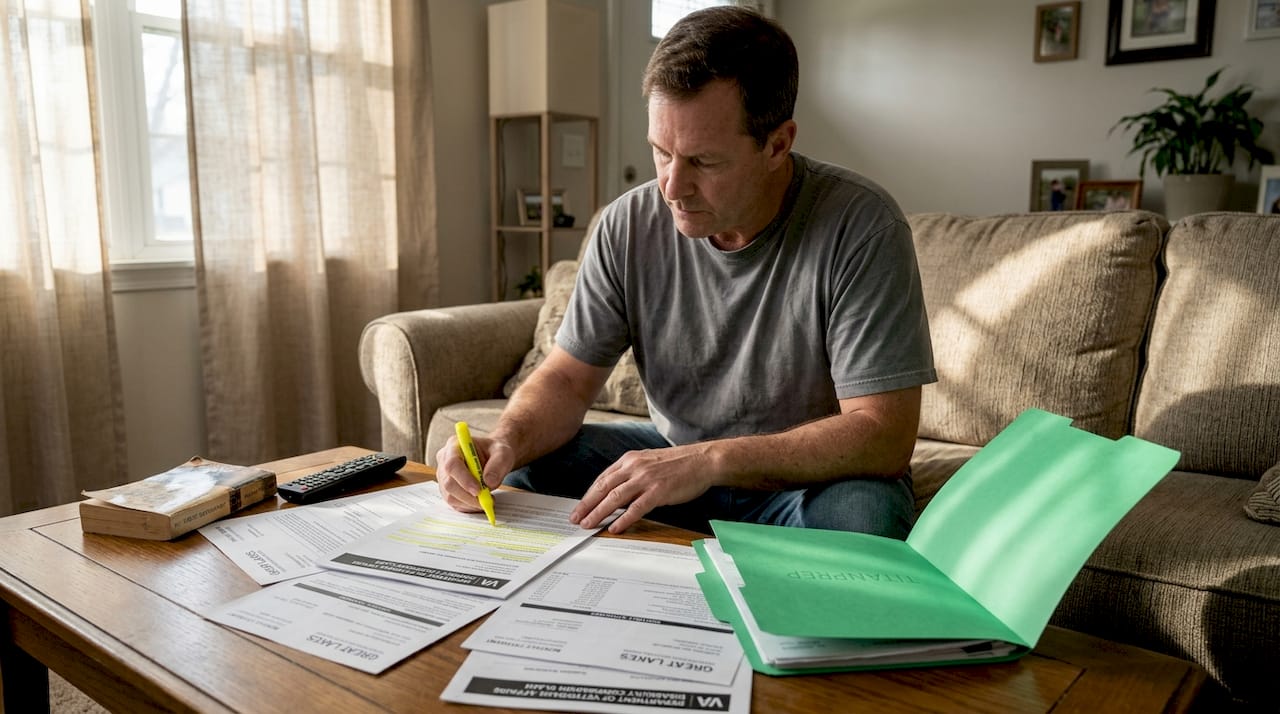
Scenario B: VA determination. A veteran receives a 100% total and permanent disability rating from the VA following a service-connected injury. He qualifies for automatic discharge without needing to file a separate TPD application.
Scenario C: Physician certification. A borrower with a severe chronic illness does not receive government benefits but has a physician who is willing to certify the disability. He completes the TPD application form, has his doctor sign the certification section, and submits it for review. This path takes longer but is still a legitimate route.
It is also worth staying informed about servicing changes and impacts as they can affect how quickly your servicer processes your TPD claim.
School closure discharge: Who qualifies and typical stories
A Closed School discharge is available when your school shut down and you were unable to complete your program as a result. This situation often affects borrowers who had no warning their school would close, leaving them holding debt and no credential to show for it.
To qualify, you generally need to meet one of these conditions:
You were enrolled when the school officially closed.
You withdrew no more than 180 days before the school’s closure date.
In some cases, borrowers who withdrew earlier may still qualify if the Department of Education determines the school was substantially reducing operations during that time.
The key evidence you need includes documentation of your enrollment dates, loan disbursement records, and confirmation of the school’s closure date. The Department of Education maintains a list of closed schools, which makes verification straightforward in most cases.
“Borrowers must meet strict timing and enrollment criteria to qualify for discharge due to school closure.”
Real borrower scenarios:
Scenario A: Sudden closure while enrolled. A student is midway through a two-year medical billing program when her school announces it is closing within 30 days. She has not completed enough coursework to transfer credits meaningfully. She qualifies for a full Closed School discharge because she was actively enrolled at the time of closure.
Scenario B: Late-closure edge case. A borrower withdrew from his program four months before the school officially closed. Because he withdrew within 180 days of closure, he falls within the qualifying window. However, he needs to confirm with his servicer that his withdrawal date is properly documented and that the school qualifies under current guidelines.
What the discharge covers and does NOT cover matters just as much:
Covered: All federal direct loans associated with the closed program.
Not covered: Private student loans, any amounts you paid out of pocket, or loans taken for a different school.
Also important: accepting a closed school discharge typically means you give up the right to transfer credits from that school. If continuing your education is your goal, this trade-off deserves careful thought.
Pro Tip: Review the detailed closed school example on TitanPrep’s site before you file, so you understand exactly what documentation to gather.
Borrower Defense to Repayment: Examples of school misconduct discharge
The Borrower Defense to Repayment program exists for a specific and serious situation: your school misled you, broke the law, or violated your enrollment agreement in ways that directly harmed you financially. This is not about being unhappy with your education. The misconduct must meet a legal standard.
Qualifying allegations typically include:
Misrepresentation: The school made false claims about job placement rates, accreditation, or program outcomes.
Illegal recruiting: The school used deceptive tactics to pressure you into enrolling.
Contractual violations: The school failed to deliver services or programs it explicitly promised.
“BDR is for borrowers harmed by school misconduct, requires a formal application, and only applies to federal loans.”
Here is how the filing process works step by step:
Gather your evidence. Collect enrollment agreements, promotional materials, emails, or any documents where the school made specific claims about your program.
Complete the BDR application. This is available through Federal Student Aid. You will describe the misconduct in detail and attach your supporting evidence.
Submit and wait for review. The Department of Education reviews claims and may contact you for additional information. Processing times vary depending on application volume and the nature of the claim.
Receive a determination. If approved, your federal loans tied to that school are discharged. Denied claims can sometimes be appealed.
Example: Misleading job placement promises. A borrower enrolled in a for-profit medical assisting program after the school’s admissions office told her that 90% of graduates were employed within six months. After graduating, she discovered the actual placement rate was well below 50%. She files a BDR claim, attaches the school’s printed brochure and emails from the recruiter, and submits her application. Because the misrepresentation directly influenced her enrollment decision and financial harm, she has a strong documented case.
For borrowers dealing with unauthorized loan issues, exploring resources on disputing loan debt alongside BDR can clarify your options. You should also be aware of common forgiveness pitfalls to make sure your application does not contain avoidable errors.
Comparing student loan discharge paths: Which is right for you?
Each discharge program is designed for a different situation. Choosing the right one depends on what happened to you, what evidence you have, and what outcome you are seeking.
Discharge type | Who qualifies | Key evidence needed | Processing time | Main advantage | Potential challenge |
TPD | Permanently disabled borrowers | SSA, VA, or physician docs | Weeks to months | Can be automatic | Requires strong medical proof |
Closed School | Enrolled at or near time of closure | Enrollment records, closure date | Typically 3 to 6 months | Clear, fact-based eligibility | Must meet timing window |
BDR | School misconduct victims | Documentation of specific false claims | Months to years | Covers major loan amounts | Evidence burden is high |
As each discharge pathway has unique documentation, eligibility, and timing requirements, you need to match your situation to the right program before investing time in an application.
If you are a disabled veteran or SSDI recipient, TPD is likely your clearest route. If your school closed while you were still enrolled, Closed School discharge is straightforward. If the school actively deceived you about outcomes, BDR may be your best option even though it requires more evidence and patience.
Reviewing available forgiveness guidance and checking whether you qualify for current relief can also help you understand if additional programs apply to your situation.
Pro Tip: Create a dedicated folder, either physical or digital, for every piece of documentation related to your discharge. Label everything by date and category. Organized records consistently lead to faster processing and fewer follow-up requests from servicers.
What most guides miss about student loan discharges
Most guides stop at eligibility checklists. They tell you what qualifies but not why so many qualifying borrowers still see their applications delayed or denied. Here is the harder truth that comes from working through these applications in practice.
The single biggest factor in outcomes is documentation quality, not just documentation presence. Submitting a physician certification that is vague about the duration or severity of your disability, for example, often results in a request for additional information or an outright denial. The form might technically be complete, but it does not meet the evidence standard the reviewer applies.
Timing errors are the second most common problem. Borrowers who withdrew from a closed school 200 days before closure often assume they still qualify. They do not, unless specific exceptions apply. Similarly, borrowers pursuing BDR sometimes wait years after the fact, assuming there is no deadline. While BDR deadlines have shifted under different administrations, waiting can complicate your claim if records become harder to obtain.
What experienced advocates see most often is borrowers who applied too quickly without reading the specific requirements, or too slowly after circumstances changed. Discharge volumes and outcomes are directly shaped by borrower-level documentation and application differences, not just the rules themselves.
One more overlooked risk: student loan forgiveness scams. When you are searching for help with a discharge application, it is easy to encounter services that promise outcomes no legitimate provider can guarantee. Knowing how to identify forgiveness scam pitfalls protects you from paying for worthless or fraudulent services while your real claim sits unaddressed.
The best approach is simple: match your situation to the right program, gather specific and complete documentation, submit on time, and follow up consistently.
Next steps: Find the right help for your student loan discharge
Navigating a discharge application is manageable when you have the right support. TitanPrep is a document preparation and support service that helps borrowers organize, prepare, and submit paperwork for federal programs including TPD discharge, Closed School discharge, and Borrower Defense applications. We are not affiliated with the Department of Education, and we do not guarantee outcomes since eligibility is determined solely by federal authorities. What we do is help you stay organized, meet deadlines, and submit complete, well-documented applications.
Start by downloading the loan forgiveness guide to understand your options in plain language. You can also check the latest student loan updates to make sure you are working with current information before you begin the process. Taking one organized step at a time makes the path forward much clearer.
Frequently asked questions
Will a student loan discharge erase all my loan debt?
If you qualify, a full discharge eliminates all outstanding federal student loan balances covered under that specific program, as discharge cannot exceed the amounts originally borrowed.
How long does it take to get a loan discharge after applying?
Timelines vary widely. Some TPD discharges are processed automatically within weeks, while others require a full application review that can take several months depending on documentation completeness and program volume.
Can private student loans be discharged through TPD, Closed School, or BDR?
No. These discharge programs apply only to federal student loans, so private loans from banks or other lenders are not eligible regardless of your circumstances.
What documentation do I need for a disability discharge?
You need proof from one of three sources: Social Security disability benefits, a VA disability determination, or certification from a licensed physician confirming your total and permanent disability.
Do discharged loans count as taxable income?
Most federal student loan discharges are currently not treated as taxable income, but tax rules can change, so always verify the latest IRS guidance before completing your application.
Recommended
Comments